

Edition: Tue, 28.04.2026
Readiness Level – how ideas are turned into marketable products
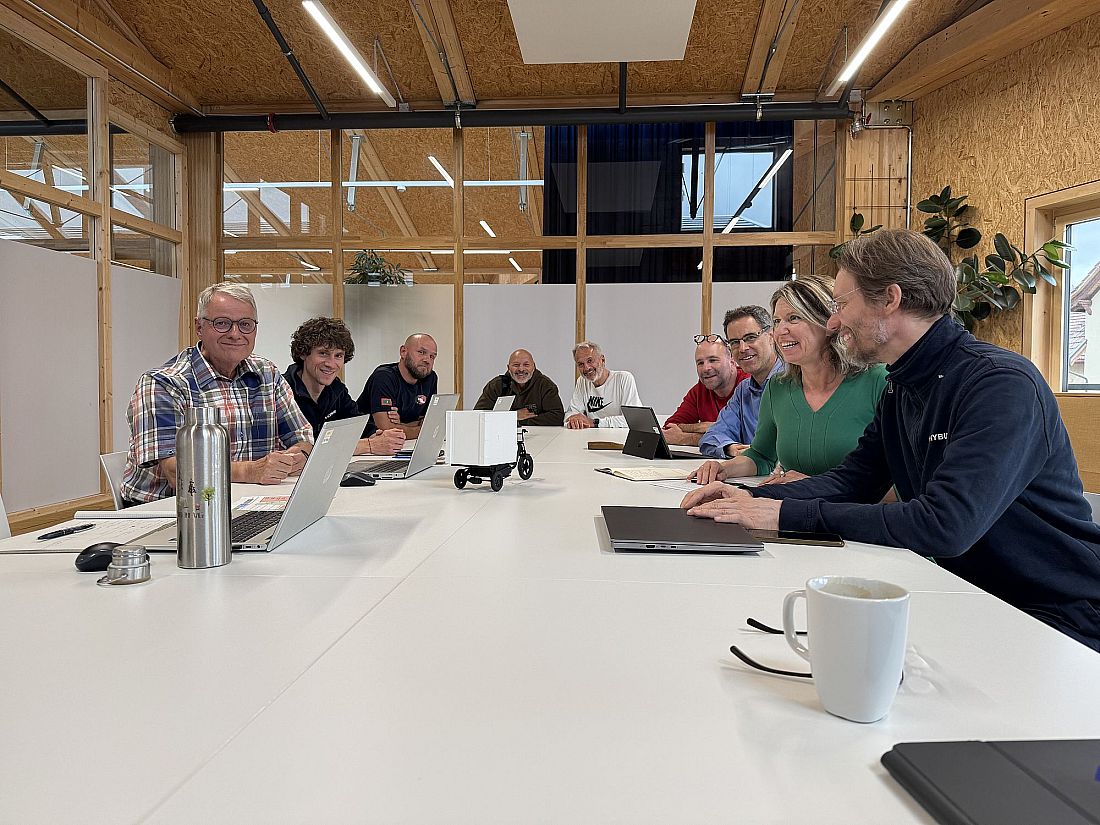
During a sales presentation, Dr Philipp Stoll introduced the team to the system known as Readiness Levels (FRL – Vehicle Readiness Levels). The aim of this model is to clearly structure development projects and transparently demonstrate where a product stands in the development process.
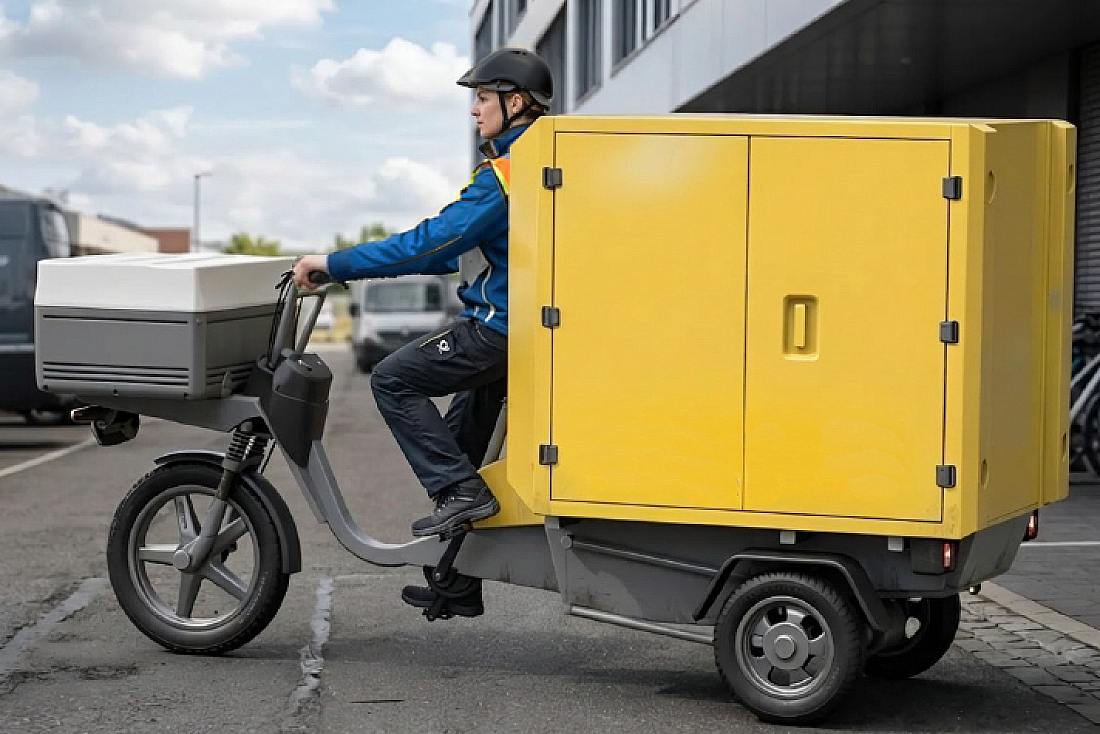
The current ePedelec 4.0 project, which is currently at Readiness Level 1, served as an example. At this early stage, the product does not yet physically exist. However, a concept, initial calculations, visualisations and basic specifications are already available. It is also possible to estimate the development time and production costs. A 3D-printed model stands in the middle of the table.
This is precisely where sales come into play: at this stage, it is essential to clarify whether a suitable market exists and whether enough customers can be attracted to the planned product. This ensures at an early stage that development is specifically geared towards real needs.
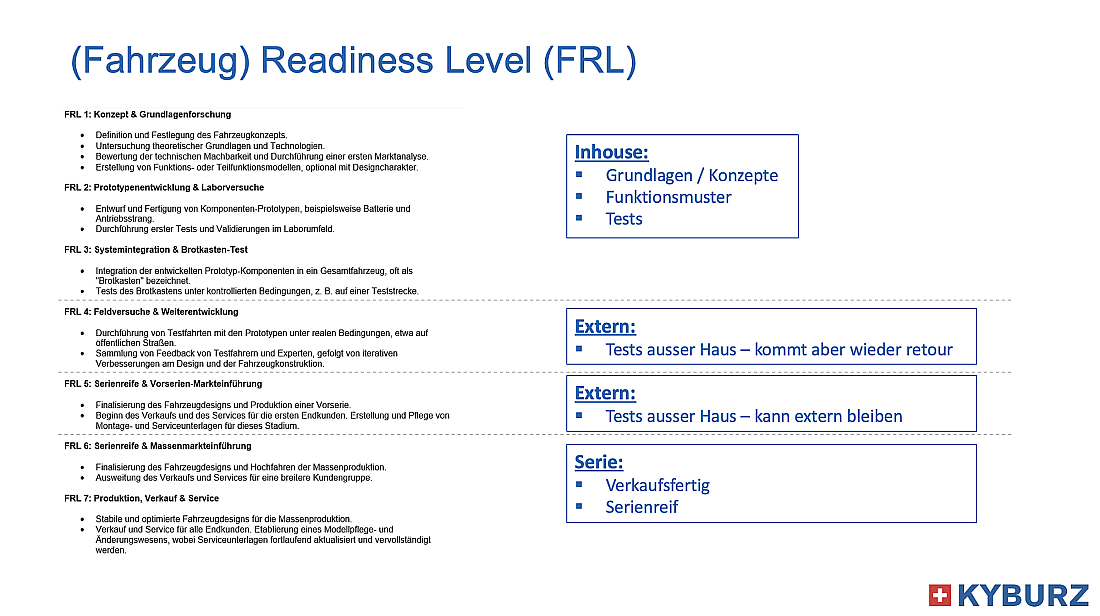
KYBURZ’s Readiness Level model is based on the so-called Technology Readiness Levels (TRL), which were developed by NASA in the 1970s. Whilst NASA works with nine levels, KYBURZ uses a deliberately simplified system with seven levels.
The classification is as follows:
- Stage 1: Concept and fundamentals – description, calculations and initial representations
- Stages 2–3: Functional prototype – initial technical solutions, initially without, later with design requirements
- Stage 4: Prototype – a drivable vehicle that can be tested under real-world conditions
- Stages 5–6: Pre-series – near-production vehicles that can already be manufactured and deployed
- Stage 7: Series – fully production-ready with all documentation, approvals and stable processes in production, sales and service
As can also be seen in the illustration, the early phases (Stages 1–3) take place mainly in-house. From Stage 4 onwards, initial tests outside the company become possible, and as maturity increases, the focus shifts towards the market and series production.
The model establishes a common language between development, sales and service. It helps to clarify expectations, set priorities and drive projects forward in a targeted manner.
Translated with Deepl